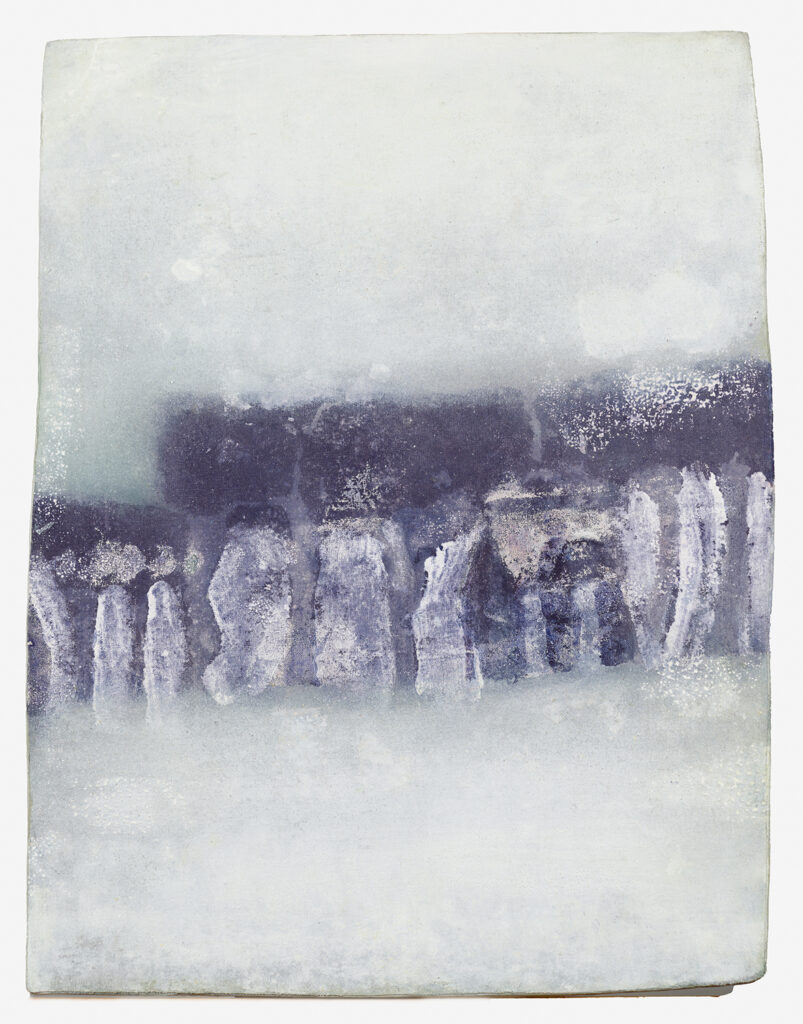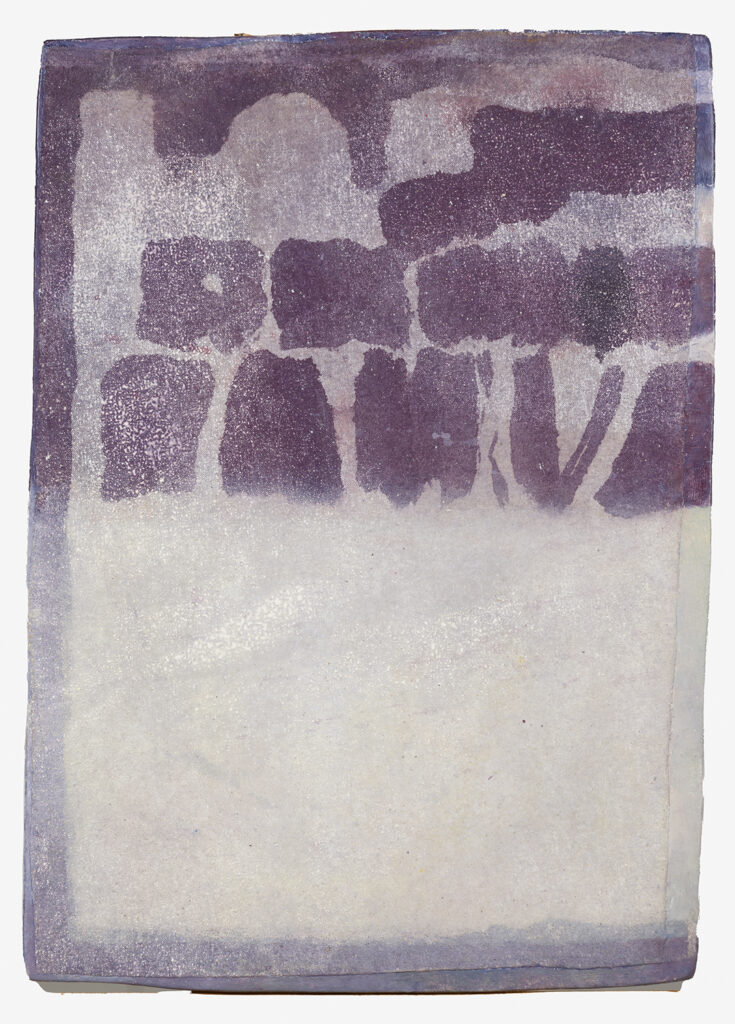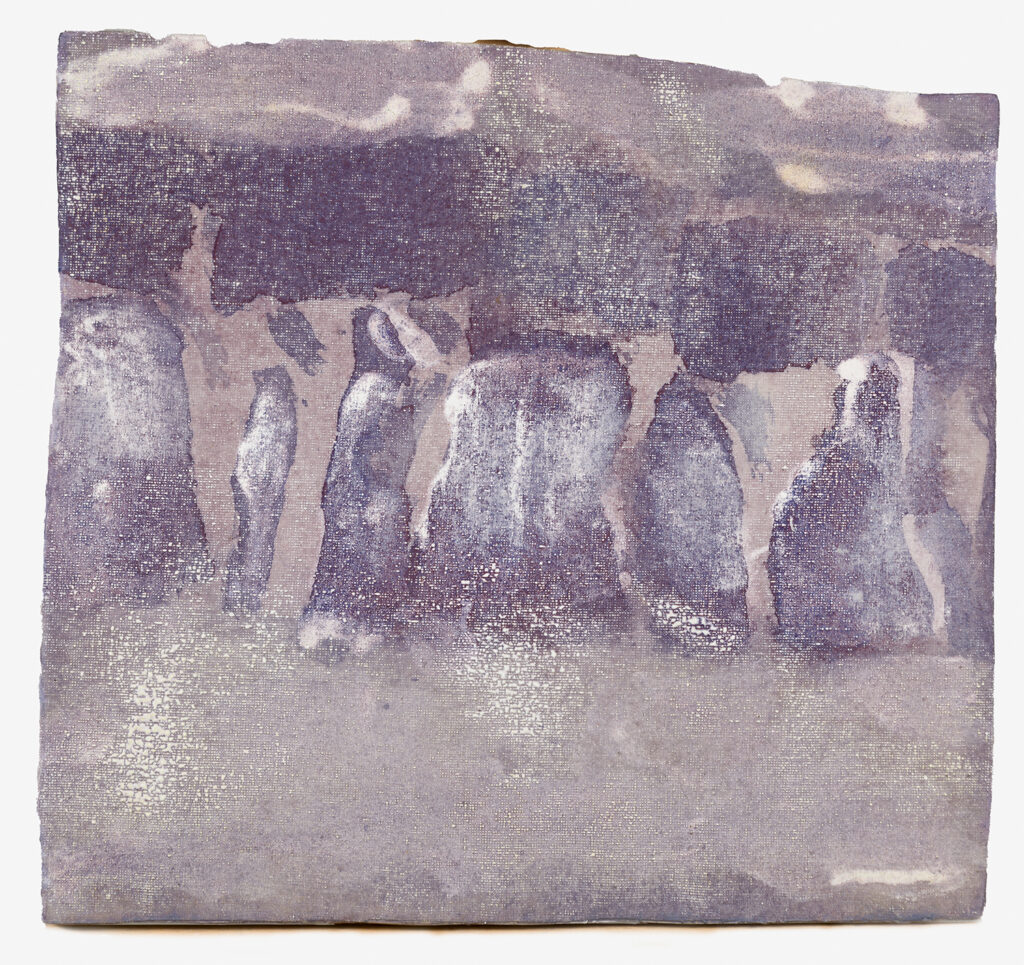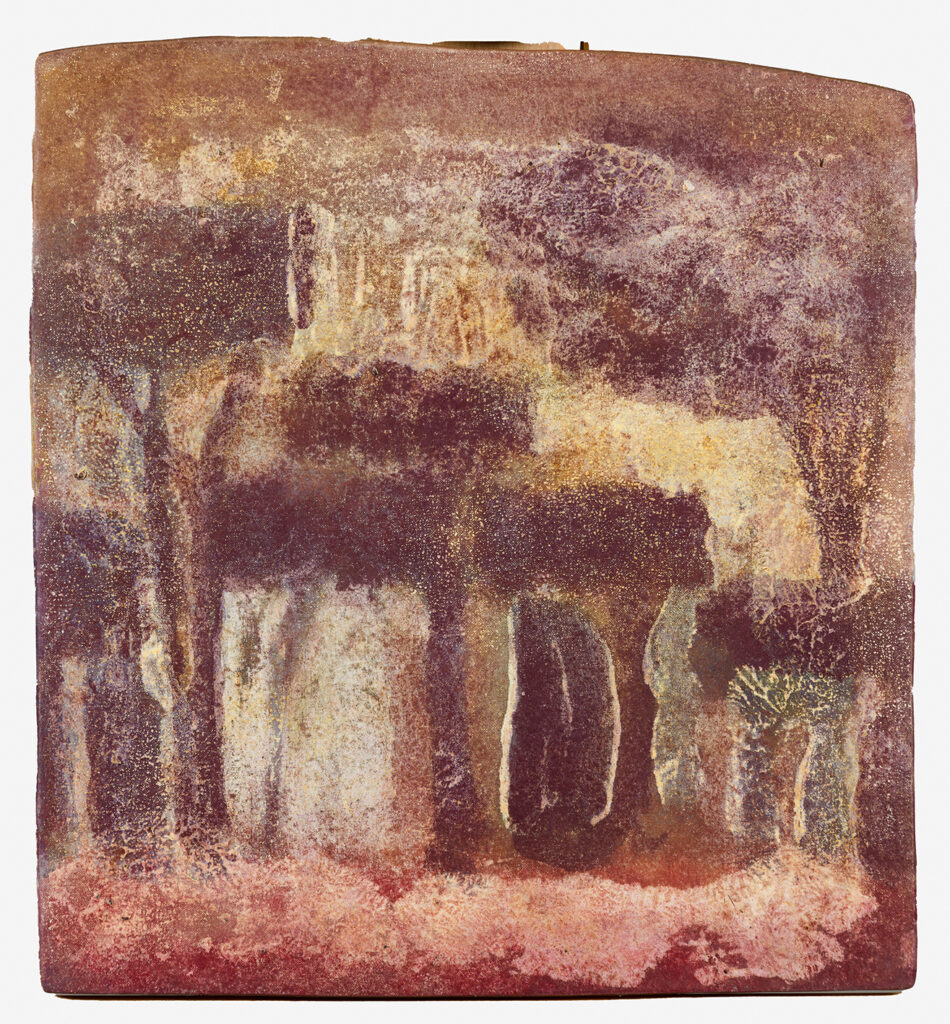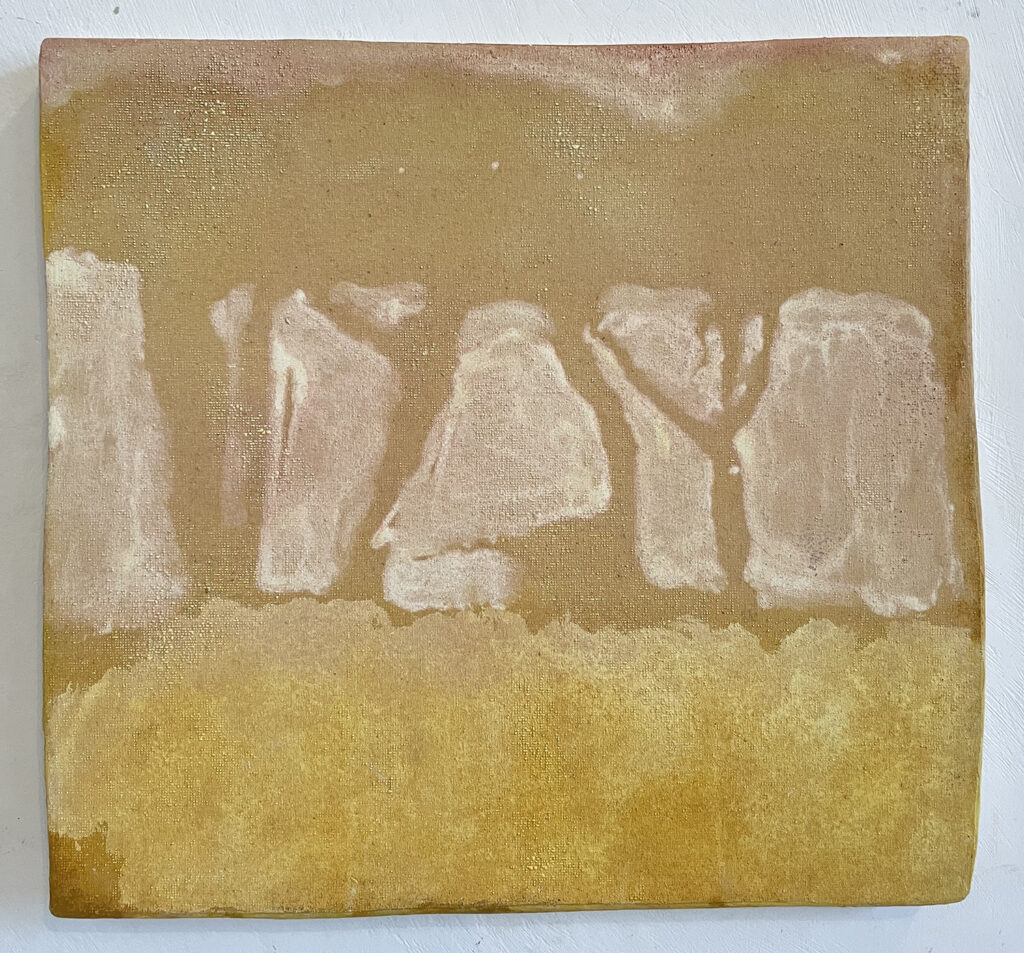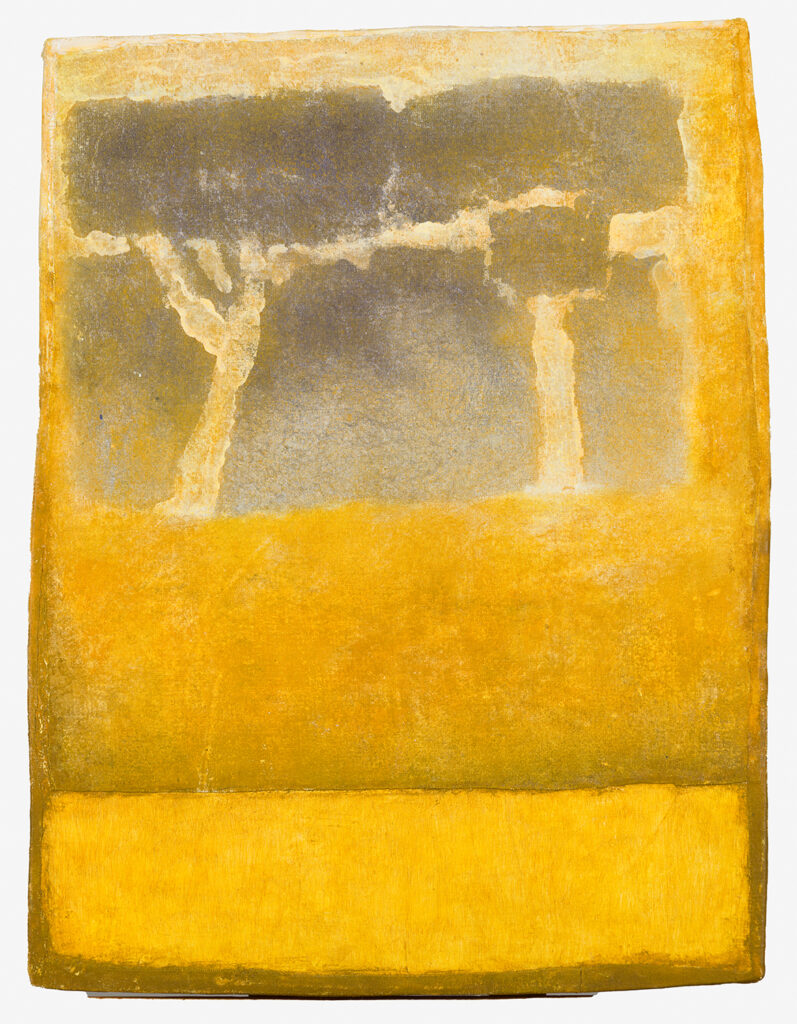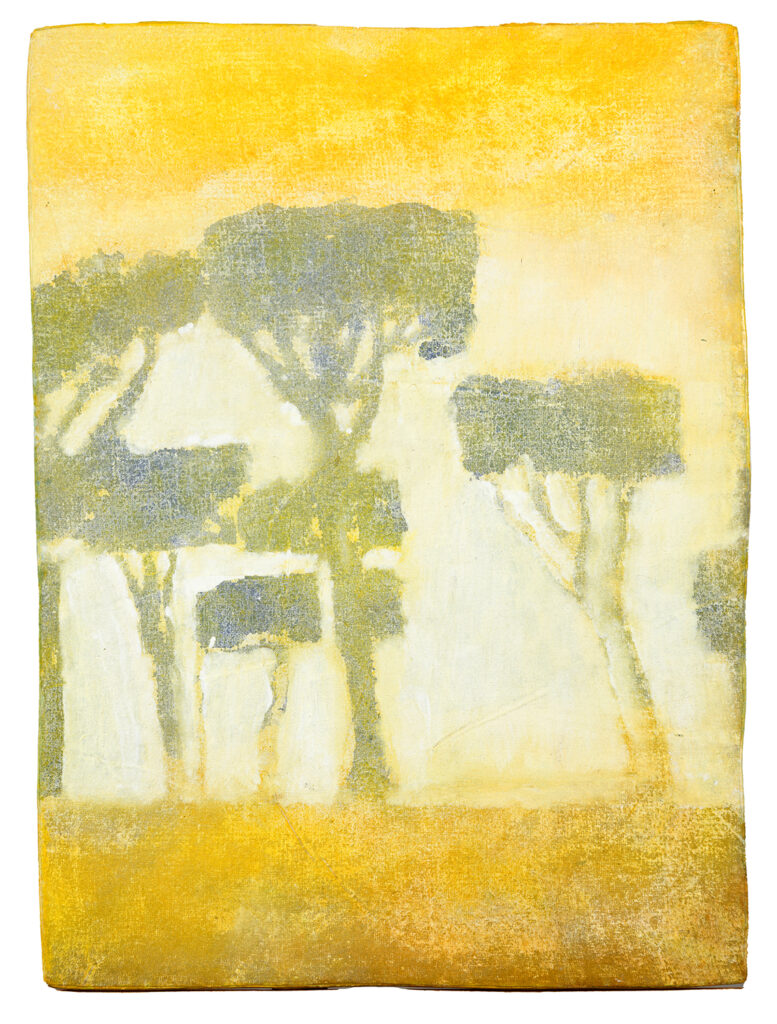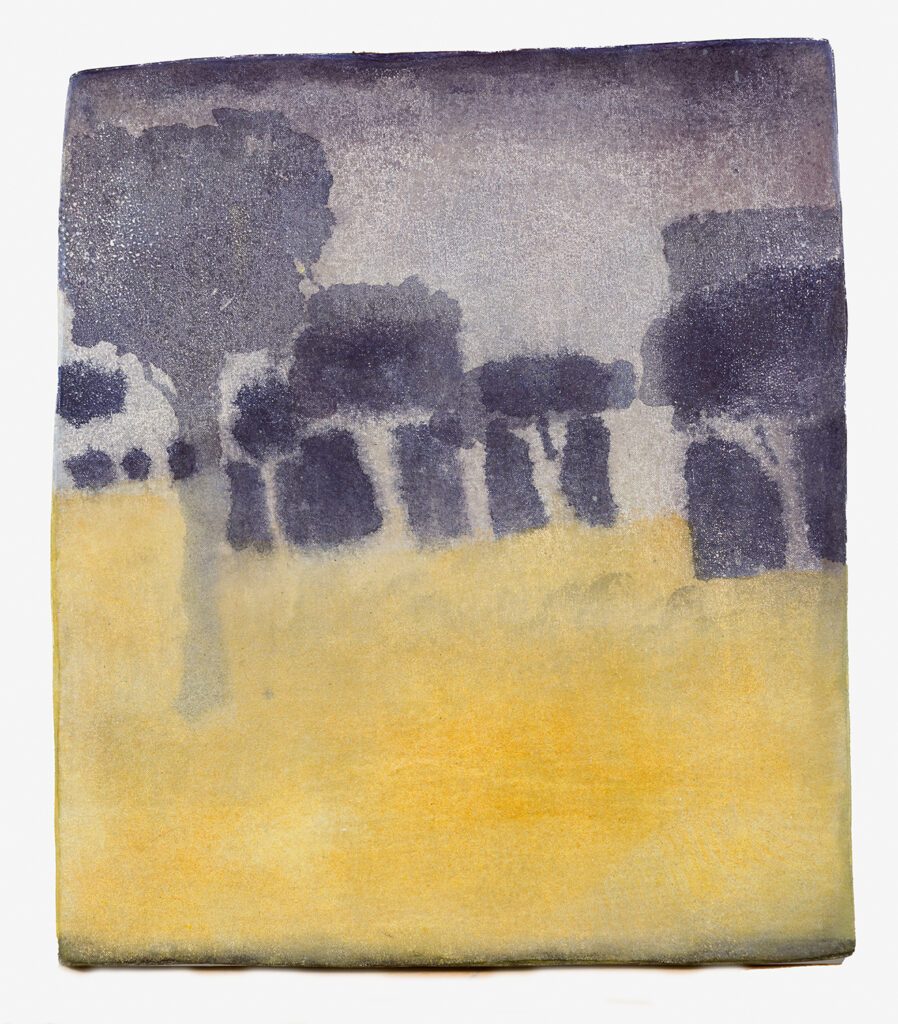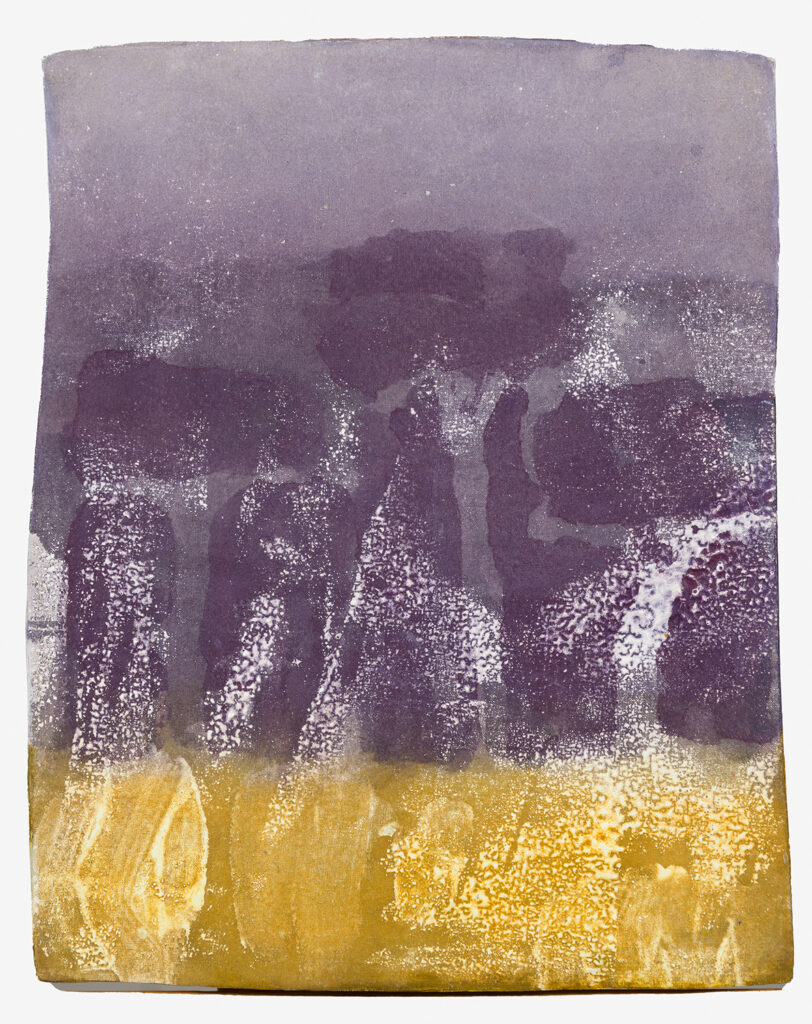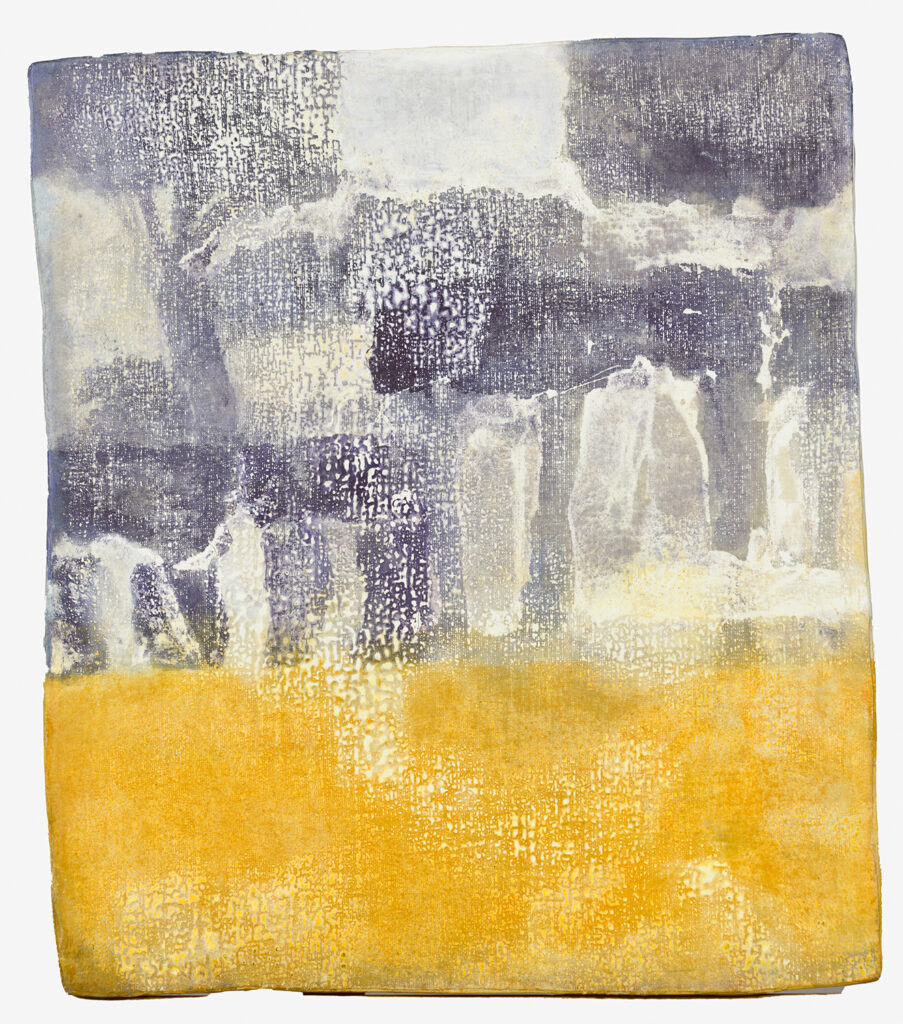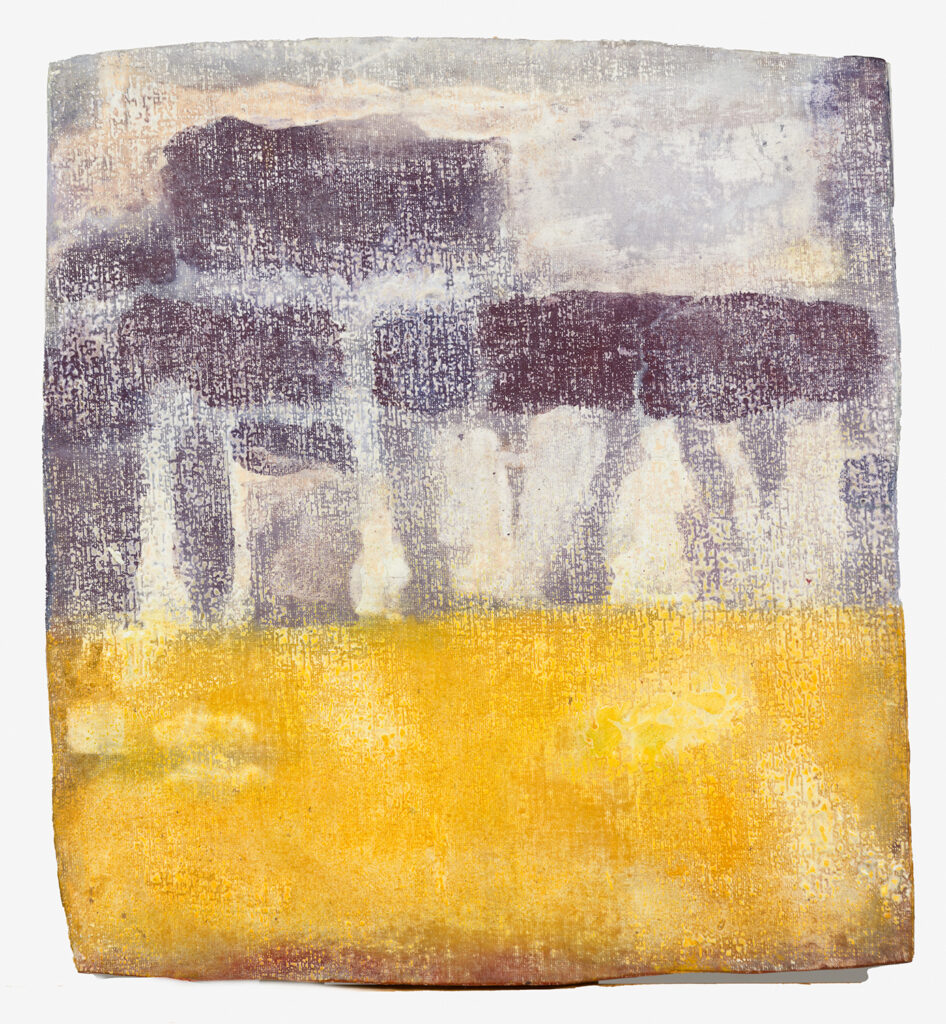
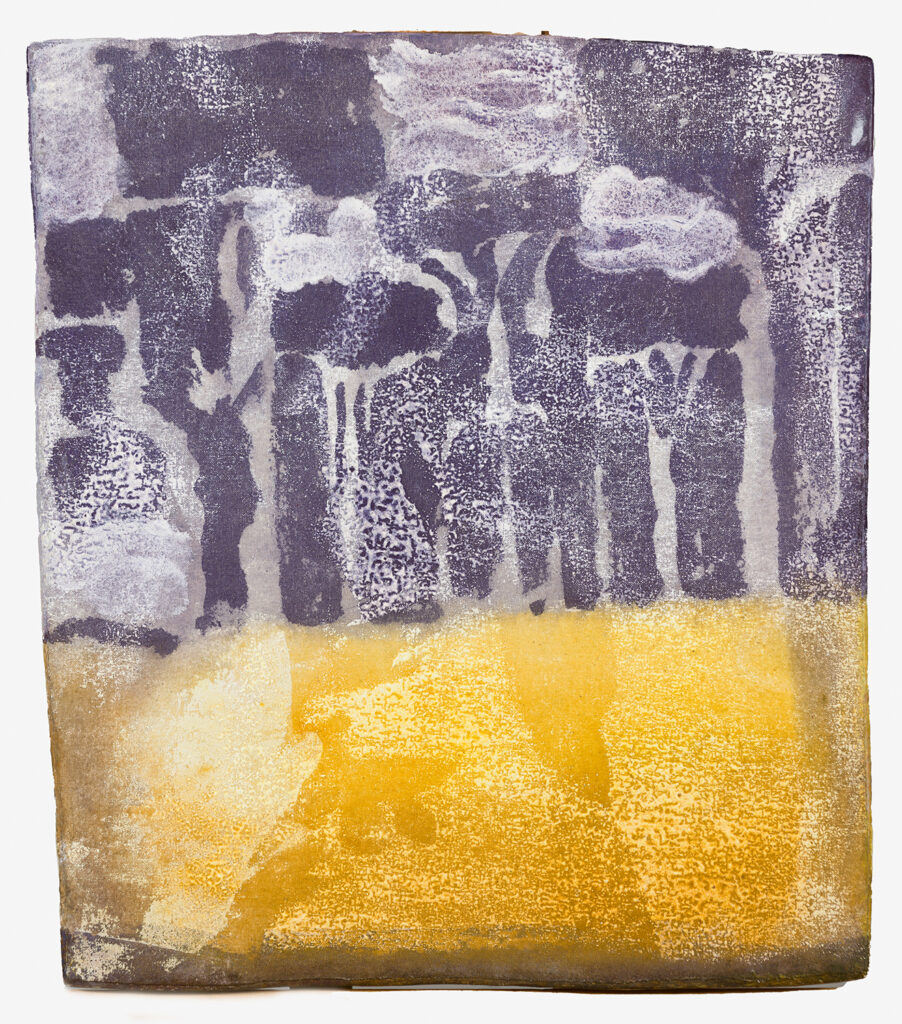
MEXICO CITY (2024): In Mexico City, Lucas Reiner builds on themes he began considering in Inglewood Cathedral (2023), in which trees along a boulevard formed light-filtered passageways and arches that suggested the doorway to a sacred space. Here, Reiner considers the spaces that exist between and beneath the canopies of trees surrounding Benito Juárez International Airport. Their forms can be read as abstracted representations of human relationships, in which their interactions suggest obstruction, support, or space depending on the subjective reading of the viewer.

Painted onto hand-cut pieces of muslin mounted onto wood, each work differs slightly in size and shape, reflecting the individuality of the trees they portray. Incomplete borders and cropped compositions emphasize their fragmentary appearance, as though they are historical artifacts belonging to a larger story within history. Transcending the boundary between painting and object, the works also reveal Reiner’s interest in religious icons and in the capacity of images to possess an agency over the viewer.

This belief in the power of imagery resonates with Reiner’s longstanding focus on the ways trees are governed by human intervention. Increasingly, however, he has begun to question whether their identity can be detached from the anthropomorphized viewpoint through which we are conditioned to read nature, and representations of nature in art. Mexico City asks whether these trees can instead be encountered beyond their symbolic relationship to human experience and appreciated for an agency of their own.