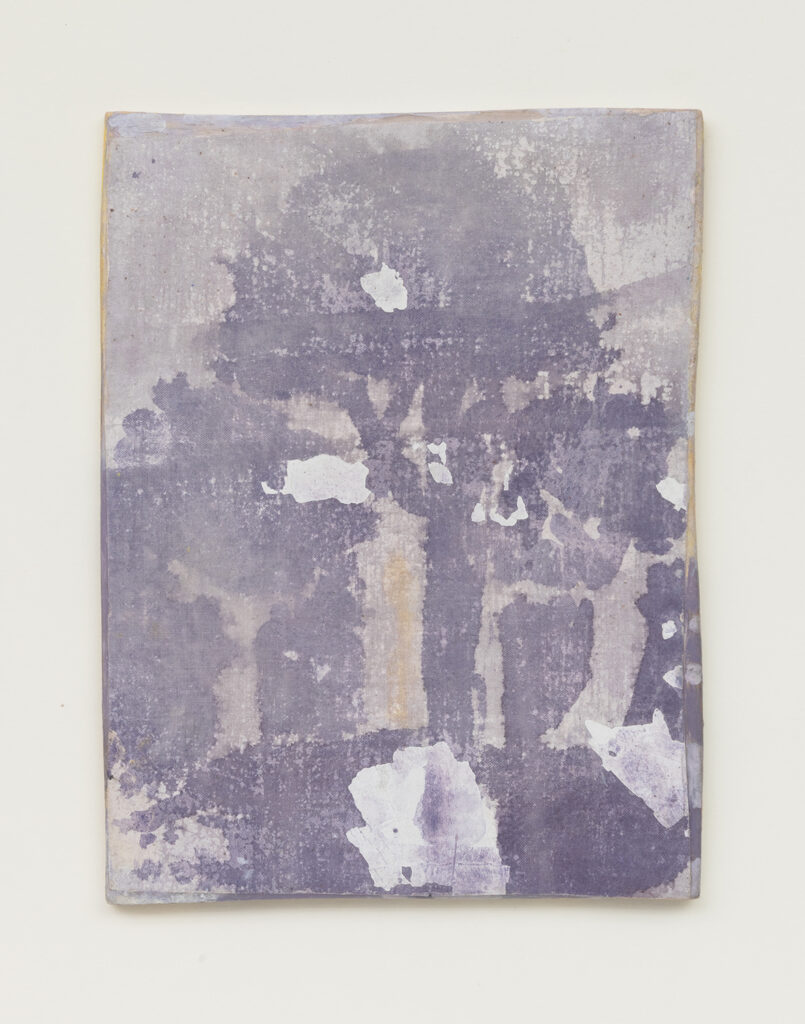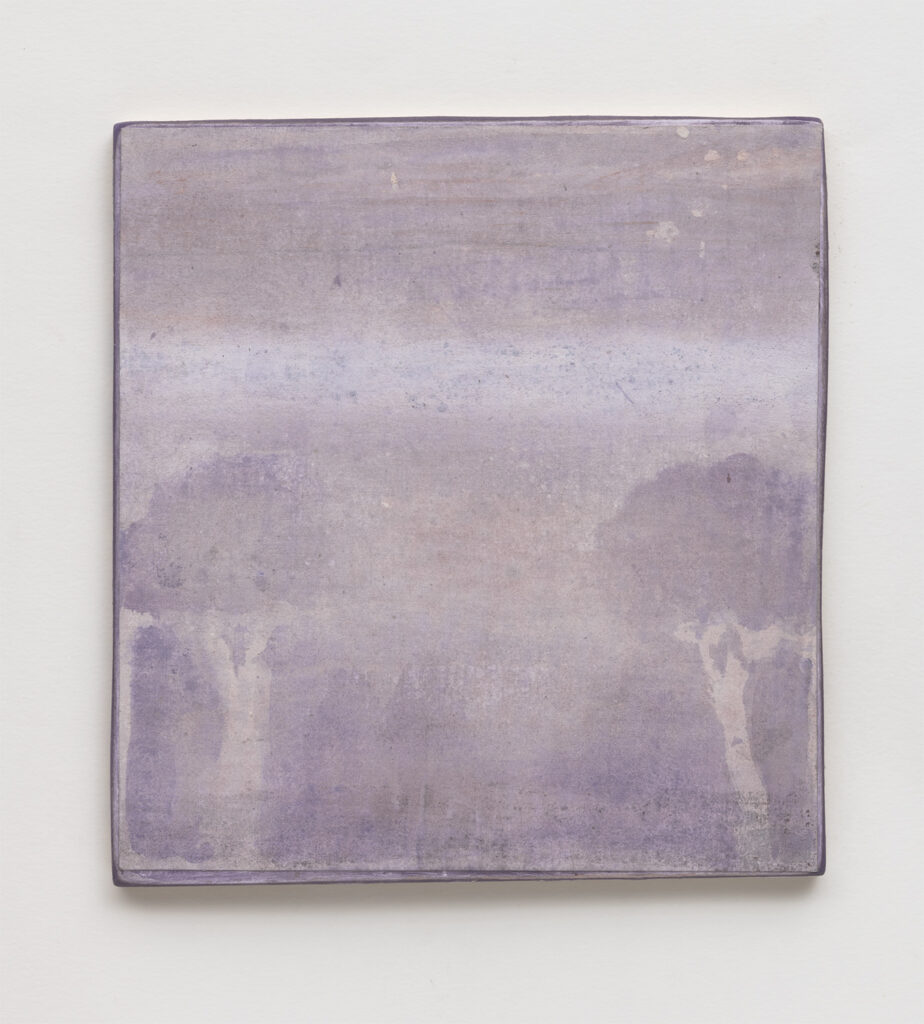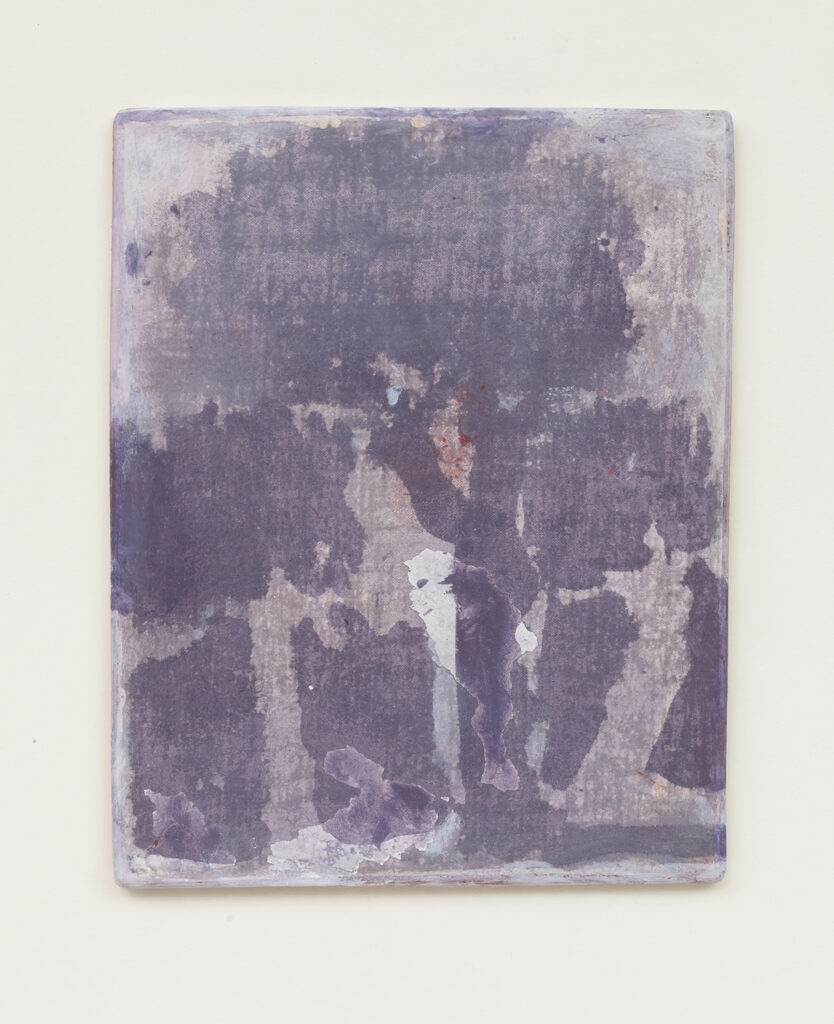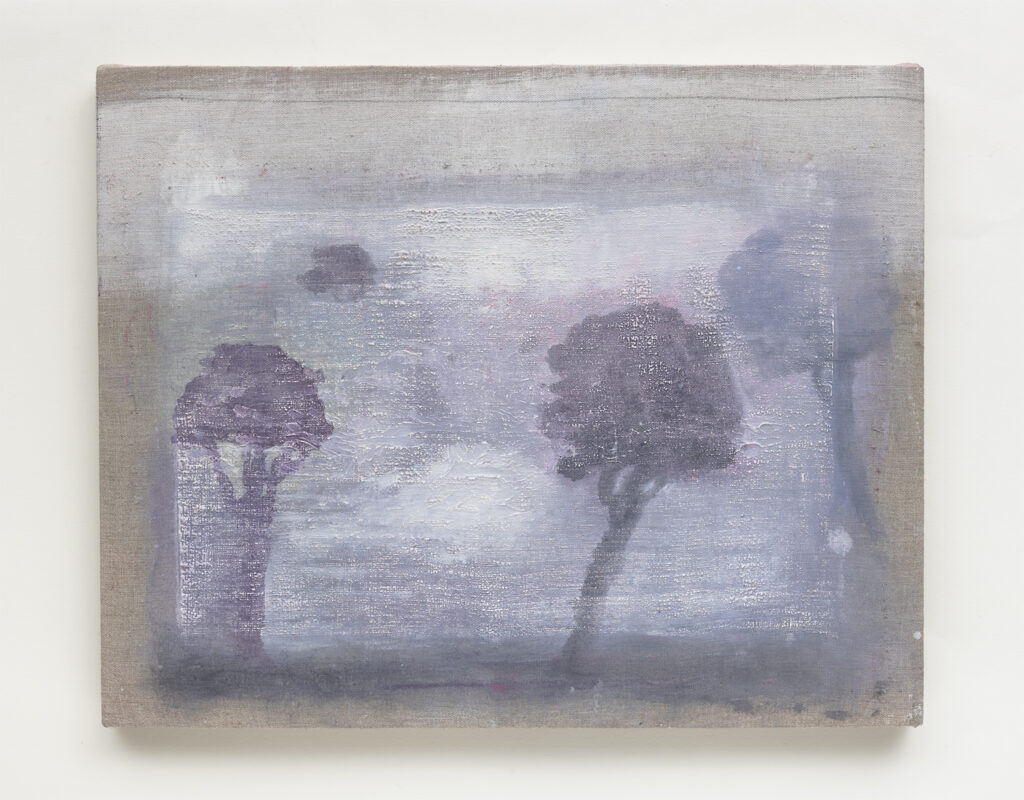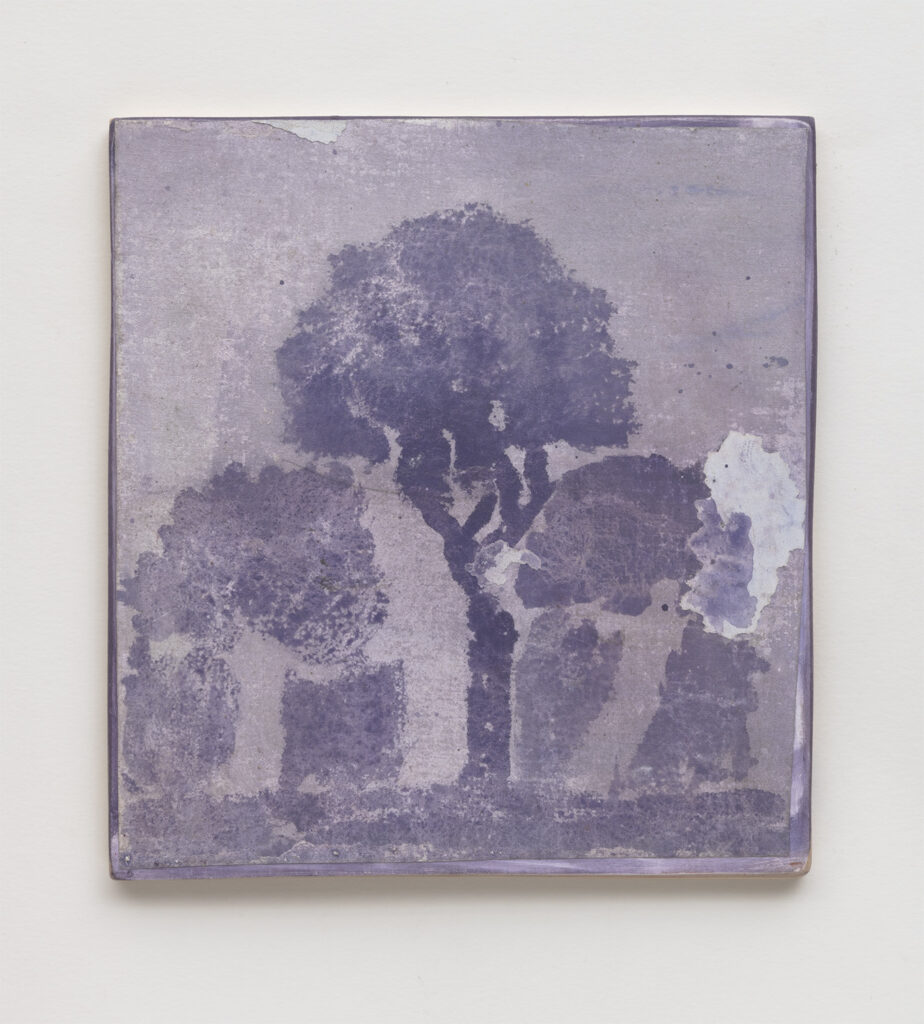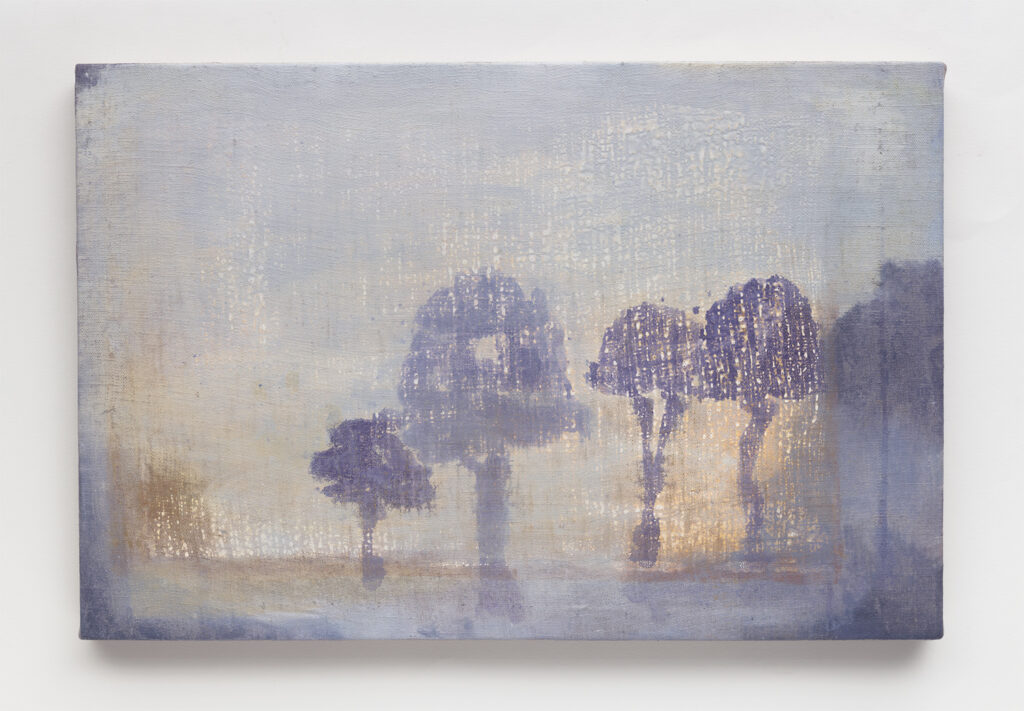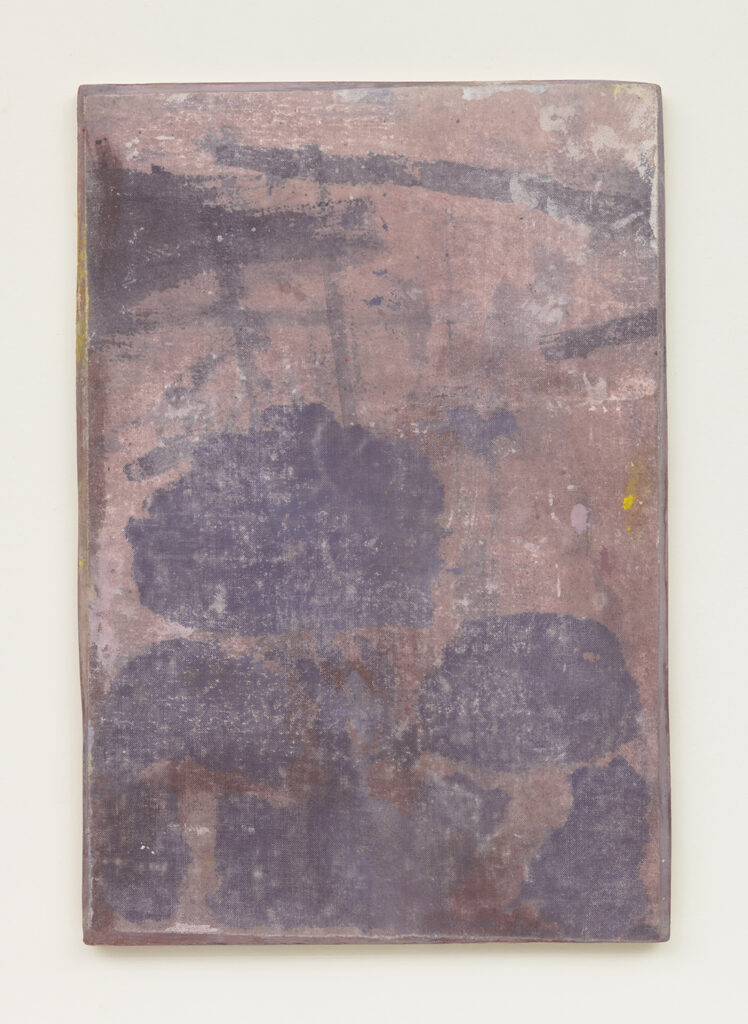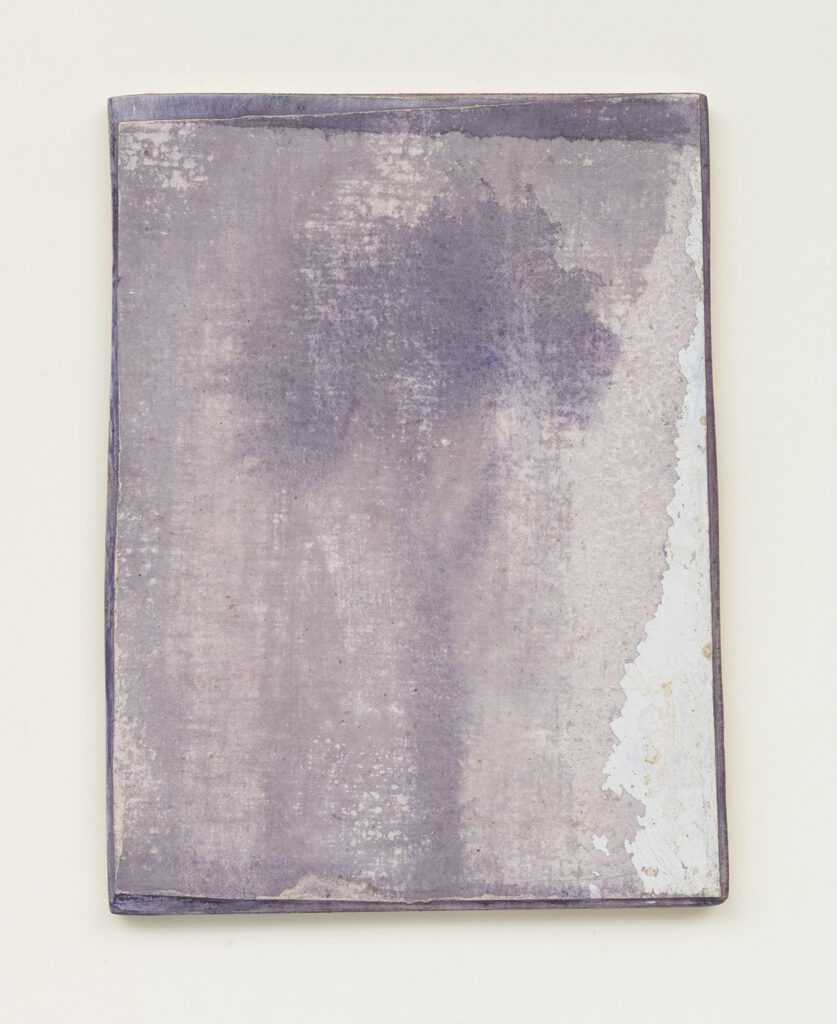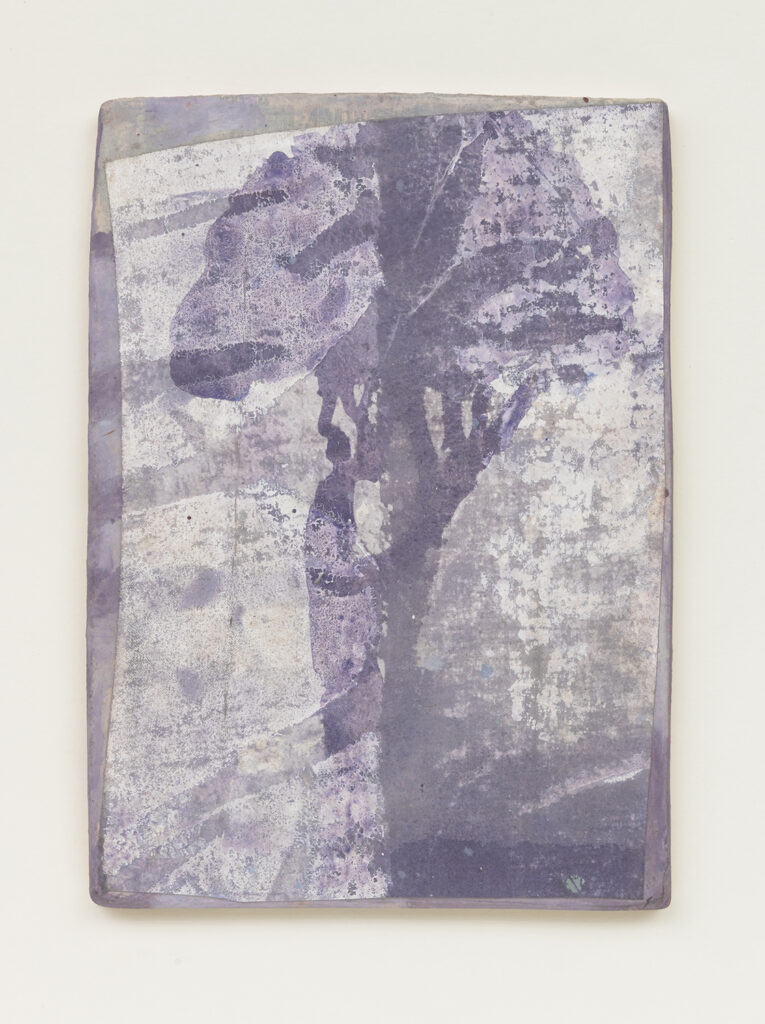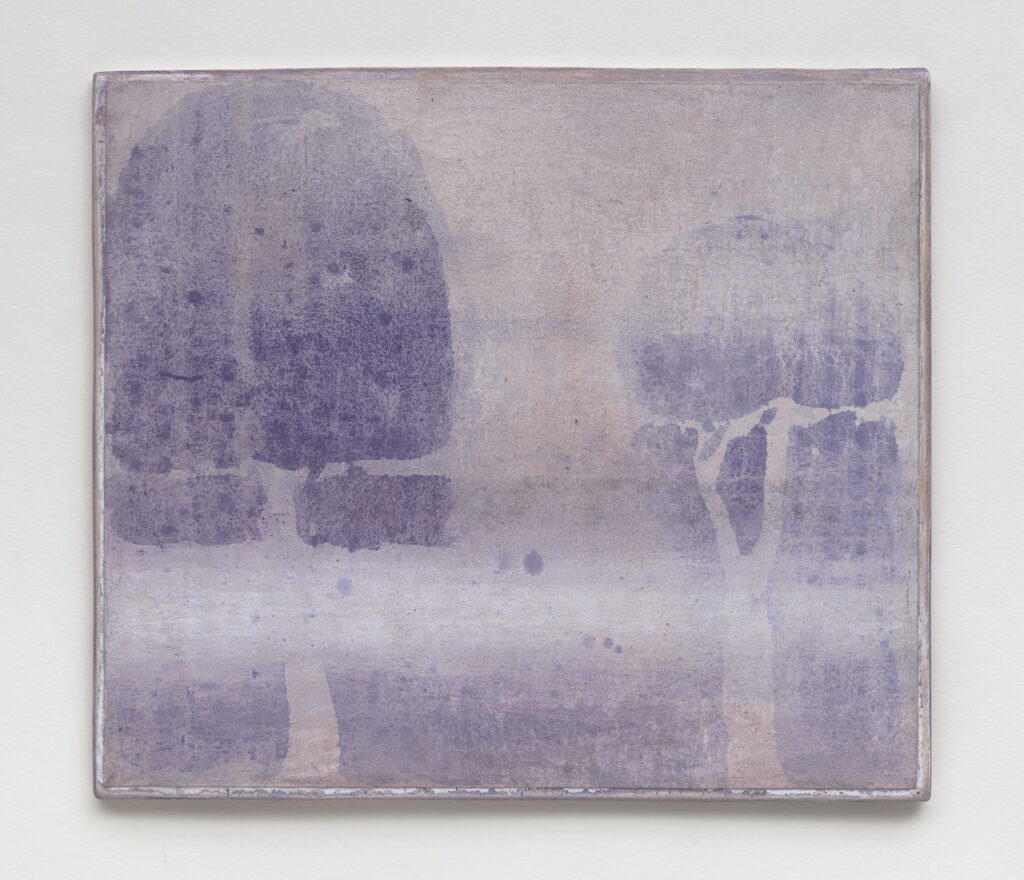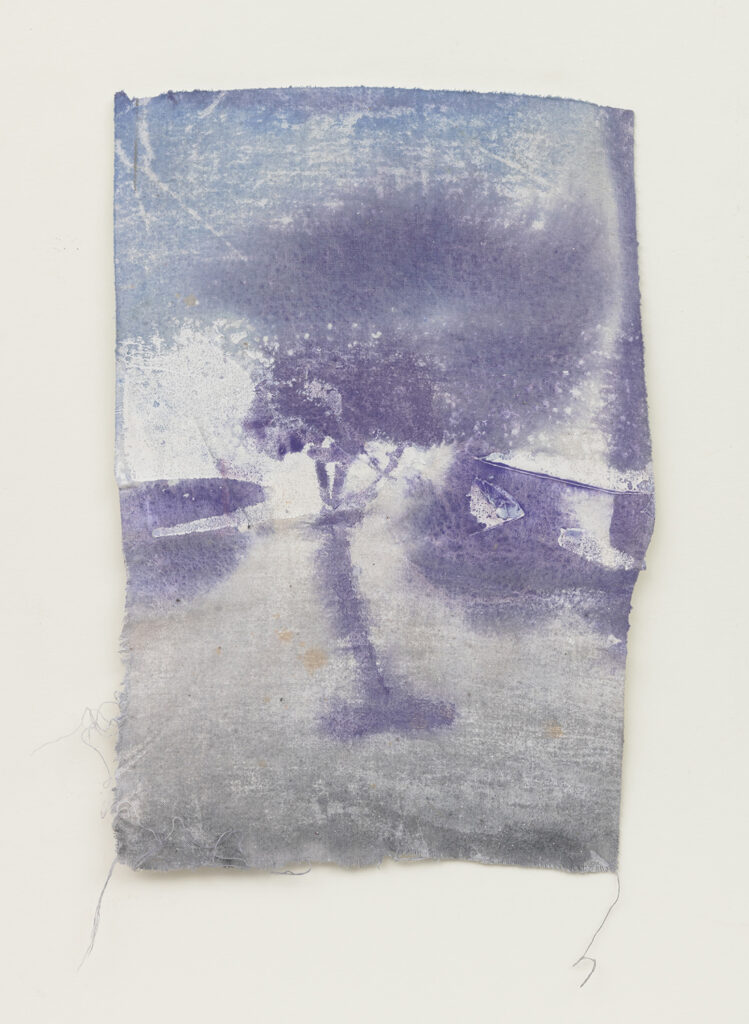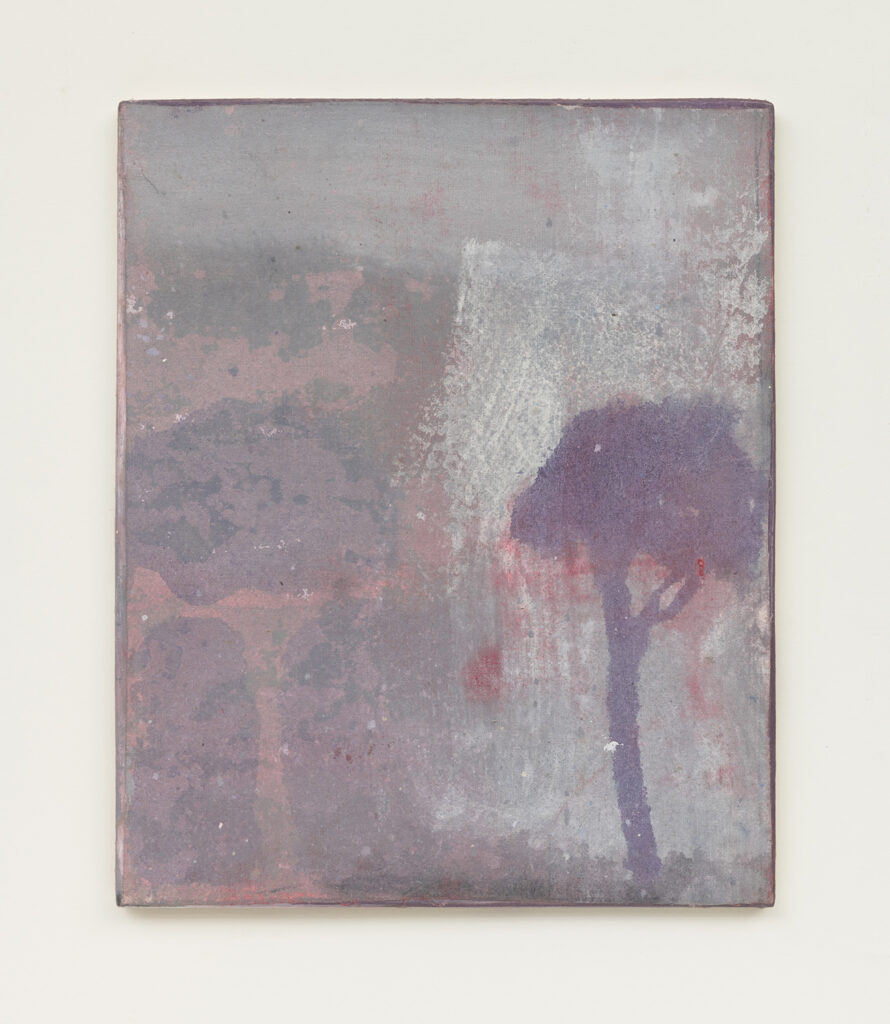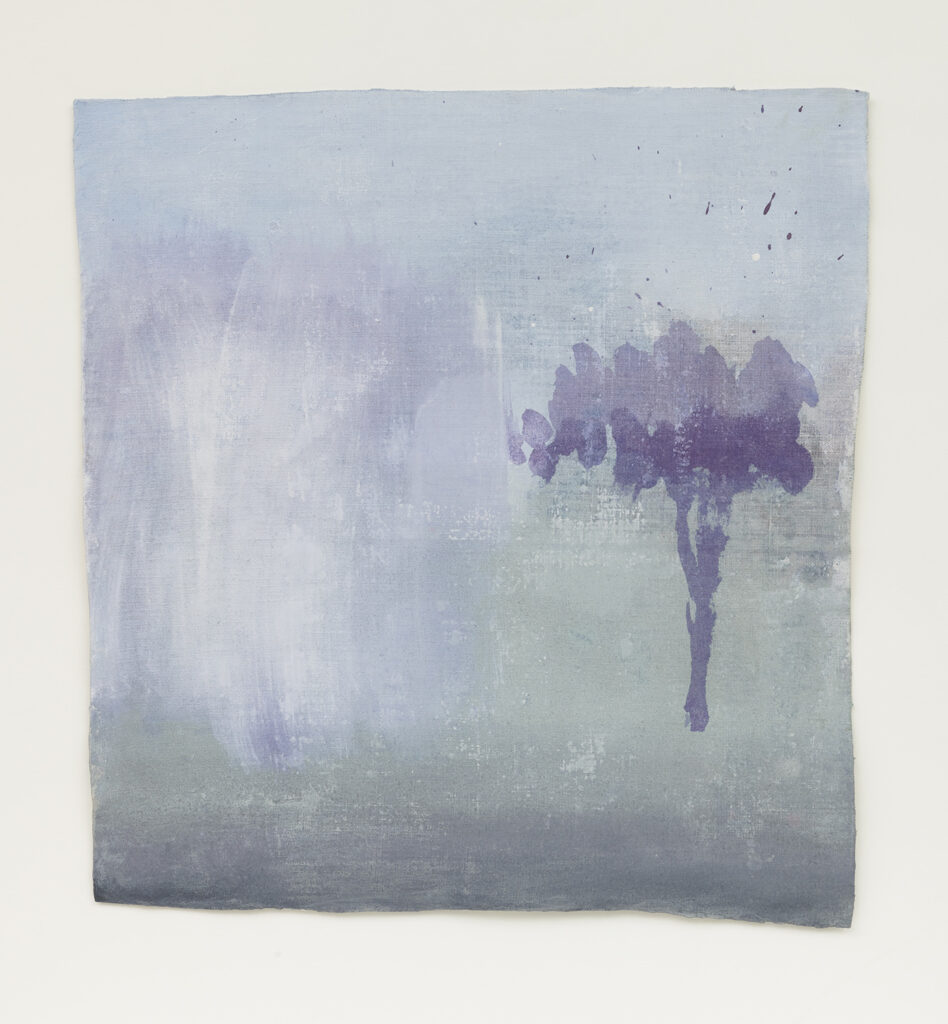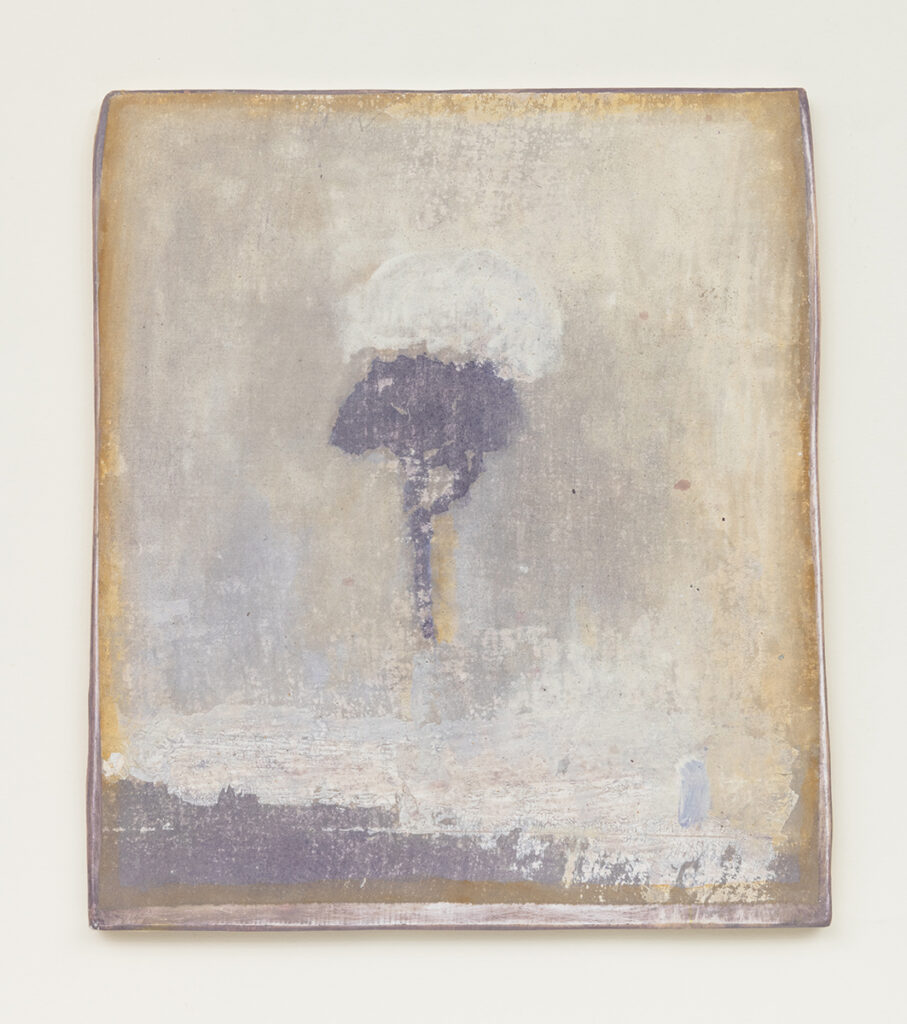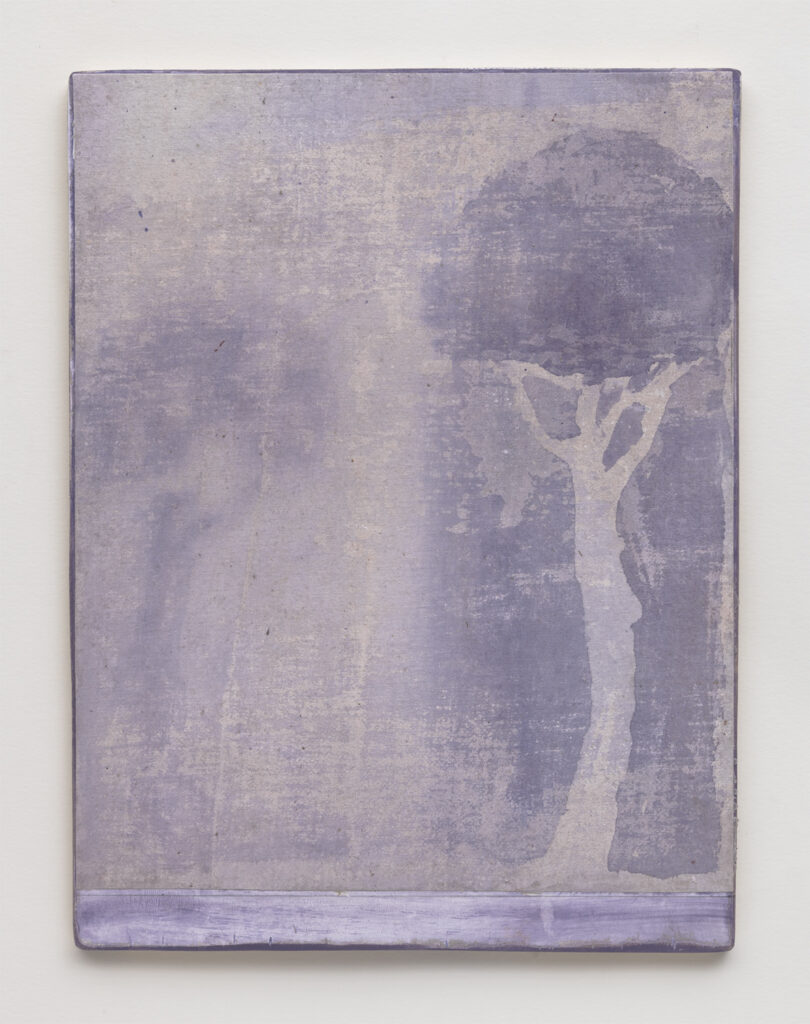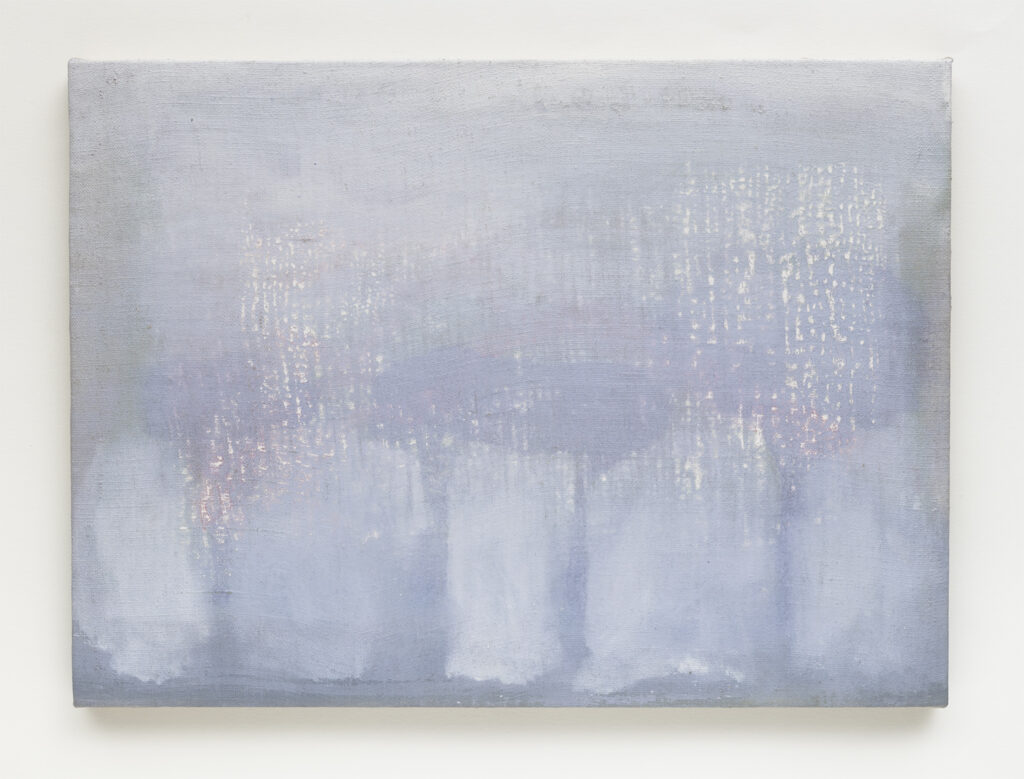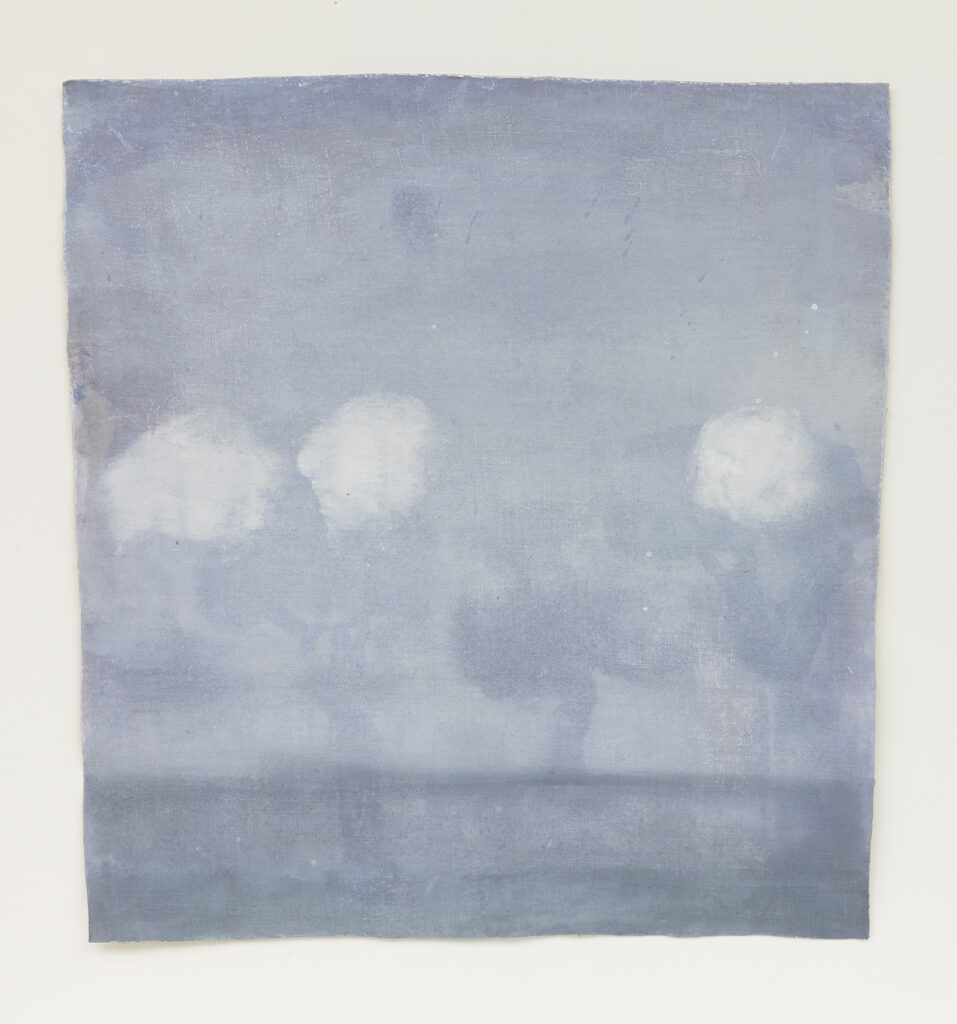
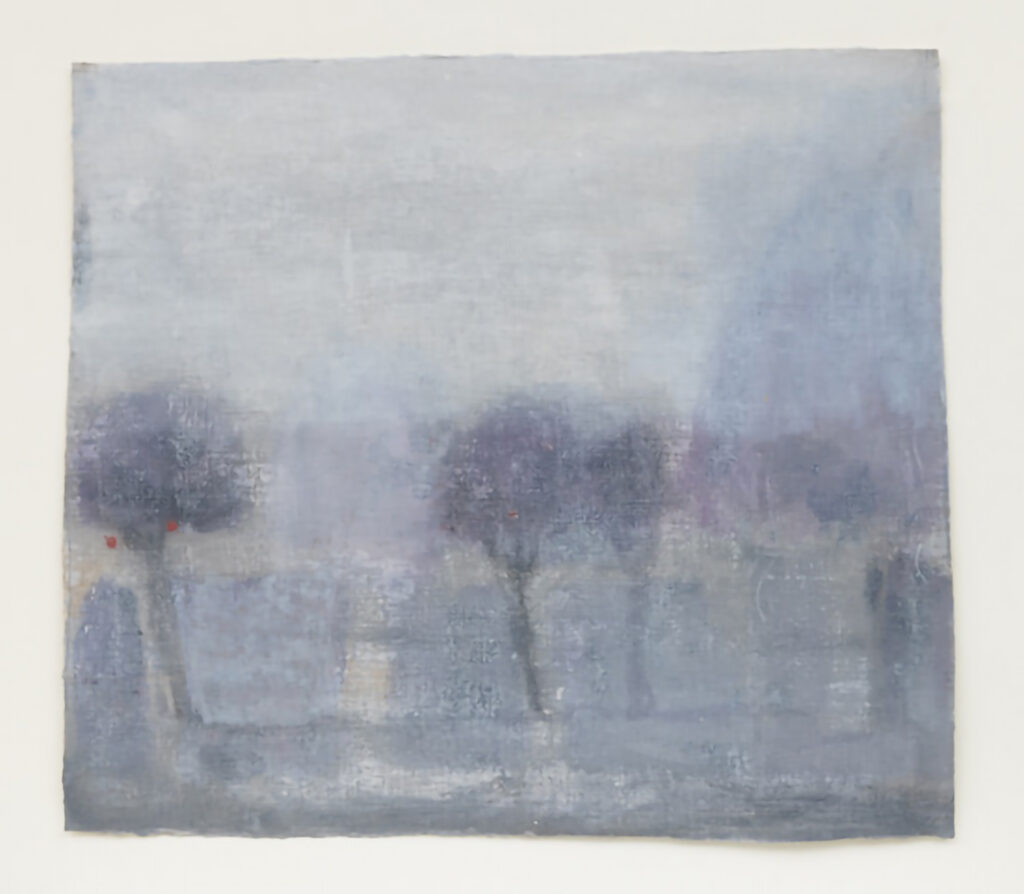
INGLEWOOD CATHEDRAL (2020): The diaphanous, penumbrous paintings in Inglewood Cathedral represent a synthesis and evolution of all these ideas—formal, material, art historical, philosophical, spiritual. What if trees were treated as the radiant and sacred beings which they are. What if such trees are the real cathedral, whether on North La Brea Ave. or in a piazza in Ferraro, or anywhere and everywhere. What if the Old World and the New World swapped places, and Caspar David Friedrich stood in nature but looked inward toward his soul. What other mysteries would an elevated quality of attention reveal to us about the world. Why does nearly every spiritual tradition and human-dreamed cosmology have a story about a tree. What formal and material techniques are available to an artist to express the glory of the overlooked.
To give these esoteric ideas concrete form, Reiner renders trees with the patient attention of portraiture, employing a lexicon of architectural materials and evocative facture that infuses the works with an object quality that’s as much holy relic as contemporary abstract—like burial shrouds or the rough stones of an ancient wall. In some ways the trees themselves are performing architecture in their form and effect, creating a liminal space for transporting from the mundane to sacred, unifying a duality. Muslin is backed with a mixture of gesso and marble dust, which is pressed through its weave to form grounds with a mottled surface; the tempera is forced to find its own level across this topography. Like that paint and those trees, humans too must always adapt to the circumstances in which we find ourselves; neither we nor the trees choose where to be planted. But also like the trees, we are a radiant and sacred part of nature, and we would do well to remember this no matter where we find ourselves. – Shana Nys Dambrot